

Oil Prices Rise — What It Could Mean for Gold and Silver |
Discover how oil prices impact the precious metals market and what it means for your investments. |
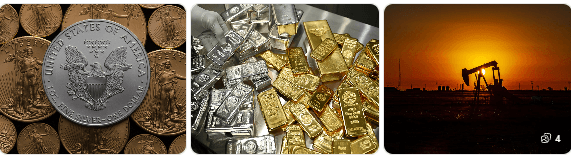
Recent increases in global oil prices are drawing renewed attention to precious metals such as gold and silver.
Historically, energy price spikes often influence broader economic conditions, which in turn can impact investor behavior.
When oil prices rise significantly, transportation, manufacturing, and heating costs typically increase.
Those higher costs can contribute to inflation, meaning the purchasing power of money may decline over time. During periods of rising inflation, many investors turn to precious metals like gold and silver as a way to protect wealth.
Gold has long been considered a “safe-haven” asset. In times of economic uncertainty, geopolitical tensions, or inflation concerns, investors often move funds into gold because it tends to hold value over long periods. Silver shares many of the same characteristics but also has an important industrial role in electronics, solar panels, and advanced technology manufacturing.
Because of this dual role—both as a precious metal and an industrial resource—silver prices can sometimes move more dramatically than gold. When economic activity increases and technology demand grows, silver consumption often rises as well.
Energy markets also play a role in mining costs. Higher fuel prices can make mining operations more expensive, which may limit supply and influence metal prices over time.
Financial analysts often remind investors that precious metals can be volatile and should be considered as part of a diversified investment strategy rather than a single solution. Still, periods of economic uncertainty frequently bring gold and silver back into focus.
As global markets continue to respond to shifting energy prices, both metals remain closely watched indicators of economic sentiment.
|
0 Comments
Join the conversation
Be the first to comment
Share your thoughts above.